Community Resource Days & Resource Fairs: Connecting Supervisees to Critical Services
| |

Community Resource Days and Resource Fairs: Connecting Supervisees to Critical Services

CSOSA believes strategic partnerships with public and private entities—including local organizations, city government, criminal justice agencies, the faith community, and individual citizens—are critical to facilitating successful reintegration. The agency is committed to ensuring individuals under its supervision have meaningful access to the services that will help them reach their full potential.

This access begins before release from incarceration. In conjunction with the Federal Bureau of Prisons (BOP), CSOSA’s Office of Intergovernmental and Public Affairs (OLIPA) holds quarterly Community Resource Day Videoconferences to help DC inmates prepare for release.

The videoconferences are broadcast to BOP facilities across the country. Participants, who are 60 to 90 days from release, hear presentations from DC organizations, law enforcement, and government agencies on the services available to them as returning citizens. They are provided the opportunity to ask questions and learn more from CSOSA and its community partners. Most importantly, participants receive a booklet containing local contacts and up-to-date program information to assist them in transitioning from incarceration to their return home in the District.

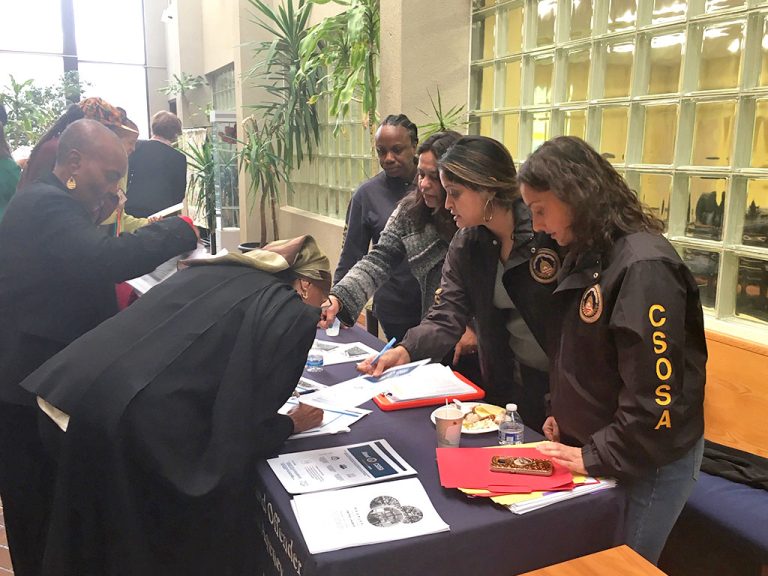
Once an individual begins CSOSA supervision, one meaningful way they are connected to the community is through resource fairs. Community Supervision Officers (CSOs) use resource fairs to educate supervisees on the services available to them through community partners. The fairs also help supervisees connect with potential mentors and employers, build relationships, and establish a support system.

At these in-person events, supervisees have the opportunity to engage directly with CSOSA community partners. Those partners in attendance typically provide services related to housing, education, employment, life skills, and mental health. However, like the supervision program itself, CSOSA resource fairs are tailored to address the current needs of the supervised population. CSOs, with assistance from OLIPA, may organize a resource fair that’s broad in scope or one focused on a specific topic.

CSOSA strives to be a model community supervision agency that is recognized for positively impacting individuals under its supervision and for improving public safety. In fiscal year 2021, 75% of CSOSA supervisees successfully completed their supervision. A key contributor to this success is the work of CSOSA community partners, who help supervisees create stability and connections to their community in conjunction with the dedication, guidance, coaching, and perseverance of CSOSA staff who work daily with supervisees.

Similar Posts

  • Fellowship Opportunities at CSOSA

    [vc_row][vc_column][vc_column_text]The Court Services and Offender Supervision Agency (CSOSA) is accepting applications for a fellowship program to provide new opportunities to people who have successfully completed a period of probation, parole, or supervised release. This program, similar to “Credible Messenger” efforts around the country, calls for the selected candidates to use their own life experiences to…

  • Fiscal Year 2022 Supervision Data

    [vc_row][vc_column][vc_column_text]Data is integral to providing evidence-informed and evidence-based community supervision to the people under our jurisdiction. Data informs our decision making and helps us track our progress towards our strategic goals. We enhance public safety and reduce recidivism in the District of Columbia, help integrate the people we supervise into the community, promote accountability for…

  • 2021 Supervision Data

    [vc_row][vc_column][vc_column_text]The Court Services and Offender Supervision Agency (CSOSA) relies on data to provide evidence-informed and evidence-based community supervision to the people under our jurisdiction. We use these data to chart our progress towards our strategic goals. Specifically, we work to promote public safety and reduce recidivism by targeting criminogenic risk and needs using innovative and…

  • PPPS Week 2018

    Mounting research indicates that there are significant benefits for our communities in helping men and women that have been in prison, jail, or on probation find employment.

    Unfortunately, some employers remain reticent to hiring someone who is or has been involved in the justice system, as evidenced by the need for laws such as Ban the Box, which, among other things, makes it illegal for an employer to inquire about criminal history prior to making a conditional offer of employment. In the District’s highly competitive and saturated job market, gainful employment remains an intractable challenge. For some, it is further compounded by the additional challenges posed by their history of involvement with the justice system.

  • Returning Citizen Sunday in 4D

    Mounting research indicates that there are significant benefits for our communities in helping men and women that have been in prison, jail, or on probation find employment.

    Unfortunately, some employers remain reticent to hiring someone who is or has been involved in the justice system, as evidenced by the need for laws such as Ban the Box, which, among other things, makes it illegal for an employer to inquire about criminal history prior to making a conditional offer of employment. In the District’s highly competitive and saturated job market, gainful employment remains an intractable challenge. For some, it is further compounded by the additional challenges posed by their history of involvement with the justice system.